
In the News |
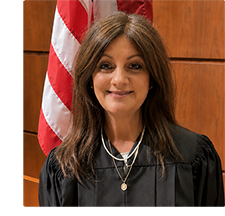
What led you to pursue law, and eventually, become a judge?
When I was pursuing an undergrad degree in Public Administration, one of the course requirements was to take a Constitutional Law class, and one of my assignments was to brief both sides of an issue in a criminal case. While providing feedback, the Professor asked me if I ever thought of a career in law. Well, the rest is history.
I decided to run for Judge after practicing law for 16 years. Through my many experiences as a criminal lawyer, mentor, and professional achievements, I felt it was the right time to engage in public service.
When you reflect on your career, what accomplishment are you most proud of?
When I reflect on my career, I am most proud that I was one of the attorneys who, along with a team of people, helped secure the release of my client who had spent 21 years in prison after he was wrongfully convicted in a murder case.
It was a painstaking journey, 10-years of pro bono representation in both trial and appellate Courts, that required lots of hard work, blood, sweat, and yes, some tears to get to the moment of walking out with him as a free man.
You currently serve as Presiding Judge of the Pretrial Division, after previously serving as Deputy Presiding Judge. How has your background in criminal defense, including your work representing Mexican nationals facing serious charges on behalf of the Consulado General de México, shaped your approach to that role?
My life experience and community inform who I am as a judge.
I carry with me the life lessons taught to me by my family, most especially my Abuela, (Grandma) she was a cleaning lady here at the Leighton Criminal Courts building and each day I literally walk on the floors that she used to clean, it keeps me very humble.
I grew up in the shadow of this courthouse here in La Villita, where the values are hard work and watching out for and helping those around you. I was raised by a single mother and in this community, it was the aunts/uncles (tias y tios) as well as the neighbors and teachers who helped guide me along the way. It is that value of community that led me to the path as an attorney representing individuals on behalf of the Consulado General de México de Chicago.
At that time, the death penalty was still in effect, and I represented people charged with very serious crimes. The relationship with them was invaluable as they were very helpful in gathering mitigation evidence from family, community, schools/churches, some of which were in extremely remotes areas of México.
Fellow Judge Rosa Silva and I continued to assist the Consulado by performing “Know Your Rights” workshops (talleres) throughout Cook and Lake County.
What advice would you give to young Latino/a professionals starting their legal careers?
I would advise any young Latino/Latinas starting their legal careers to become involved in Hispanic/Latinx Law Student organizations within their law schools.
Networking is so important, they should join bar associations, volunteer and attend as many law-related events as possible, don’t be afraid to strike up that conversation with a lawyer or a judge, we’re here to help!
What is one of your favorite traditions or customs of your culture? (Ex. food, a special event, a family tradition, etc.)
My favorite traditions from my Mexican heritage revolve around Christmas. We make tamales & distribute them to friends and neighbors, play Loteria (Mexican Bingo) and attend midnight mass.
When I was little, a special thing we did was to attend Posada celebrations along 26th Street. There was lots of singing, glowing lights, food/candy, and much to the delight and amazement of us city kids.
Why do you think it's important to recognize Hispanic heritage, not just this month, but every day?
Hispanic heritage provides such a cultural bounty of art, music, food, as well as educational and professional contributions to our daily lives here in the Chicago area. It is important that we recognize those contributions as they continue to inspire future generations.
Why is diversity important on the bench?
Diversity is important on the bench because as Judges we deal with people from all walks of life, sometimes in their worst moments. A judge needs to understand different cultures and communities as it assists us to be more thoughtful so that we render the best outcomes for the People who appear before us.
I am a founding member of ILJA (Illinois Latino Judge’s Association) which is comprised of Latino/Latina Judges from throughout the State, including members of the Appellate and Federal Benches. Our organization is dedicated to providing opportunities to members of our community so that they may advance both in the legal and judicial professions.
Is there a moment in your career, on the bench or before, where your identity or background gave you a perspective that changed how you approached a case or a courtroom?
Yes, a moment that I will always carry with me comes from early on in my career when I was representing a client charged with first Degree Murder. He was acquitted but had been held in custody for a very long time pending his trial. He came from a tight-knit Mexican family with a wife and 2 young daughters.
The eldest daughter was about 12 yrs old and would continually ask me about my educational journey. I explained the path (CPS HS Diploma, Undergrad, Law School) and she continued to look for direction from me well after her father’s case concluded. We still remain in touch; she graduated from college & was extremely proud to tell me about her first job. - I am eternally grateful that I had the opportunity to mentor and guide her.