In the News |
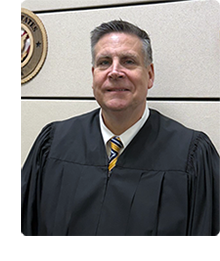
After a decade of active-duty service in the United States Marine Corps, reaching the rank of Major and serving in both defense and prosecutorial roles, Judge Michael Hood brought the lessons of military service into his legal career.
In recognition of Veterans Day and National Veterans and Military Families Month, Judge Hood reflects on leadership, accountability and the values of service that continue to guide him on the bench.
What inspired you to join the military, and what branch did you serve in?
I have always felt service to our nation was important. For me, that service was the military. After considering all branches, I felt the United States Marine Corps was the best fit. I served on active duty through the rank of Major.
What was your role in the military, and what did a typical day look like?
During most of my decade with the US Marine Corps, I served in both defense and prosecutorial roles. In those roles, much of my day resembled that of a public defender or Assistant State's Attorney in Cook County, with discovery issues, client meetings, motion practice, and litigation.
At the same time, I balanced Marine Corps requirements, including formations, physical fitness, and duty officer responsibilities. I also deployed twice overseas as the Staff Judge Advocate with the 15th and 26th MEU SOC (Marine Expeditionary Unit, Special Operation Capable).
While deployed, I managed complex rules of engagement issues, as well as other subjects related to large-scale troop presence in foreign countries and international waters. Because these units served as expeditionary rapid reaction forces, no two days were alike.
Are there any values you developed in the military that you still rely on in your judicial service?
Most everything I learned in the Marine Corps can be applied to everyday life. Timeliness is one example. The Marine Corps demands it, and being on time is considered late. That lesson has stayed with me throughout my life. Although many Marine Corps lessons carried over into my civilian career, it was not until I worked in courtroom 302 that I saw them demonstrated from the bench.
After leaving active duty, I was fortunate to work for Judge Ken Wadas, a tremendous Marine who treated everyone with courtesy and respect. He was hard but fair. Watching those same Marine Corps principles at work in his courtroom taught me how to apply them from the bench.
How did your military experience shape your understanding of leadership?
I learned a great deal about leadership during my decade in the US Marine Corps. I learned that leadership is not defined by someone’s rank, title or position within an organization. True leadership means accountability, leading by example, humility, sacrifice and mission accomplishment It means doing the right thing when nobody is watching. Above all, it means service beyond self.
What similarities, if any, do you see between serving in the military and serving the public from the bench?
Service to the country is no different than service to the county or state. It means being cognizant of the people you are serving. Attorneys, the public, a venire, defendants, and victims deserve your respect and attention. The only significant difference is the degree of danger. The courtroom is a much safer place than many of the places the Marine Corps sent me.
What is one memory from your military service that has stayed with you over the years?
It is hard to pick a single memory from a decade of service. More than any specific memory, traveling around the world has had a lasting impact on me. I visited over forty countries while serving in the Marine Corps and experienced a variety of cultures across Europe, Africa, Southwest Asia, and the Middle East.
I learned that the world is bigger and more complicated than I imagined. I experienced terrific highs and incredible lows while deployed, and those experiences shaped the perspective through which I view the world today. I believe that actually traveling to and experiencing these places provided a clearer perspective than simply reading about them or watching the news.
What is the most important lesson you took away from your time in the military?
The most important thing I learned in the Marine Corps is accountability and mission accomplishment. Whatever the mission may be, get the job done and never pass the buck. Ownership in your role is essential. Never let perfection stand in the way of progress and always continue to move forward.
What does Veterans Day mean to you personally?
I believe every veteran has answered a call to selfless service and placed duty and honor above self. Each wrote a blank check payable to the United States for an amount up to and including their life. Even when the uniform is put away, the responsibility remains. Every veteran understands this. In my situation, a Marine remains a Marine.
Veterans Day is a day to honor the men and women who made this sacrifice. Whether they served one tour or a lifetime, they deserve our respect. As a nation, we owe them all a debt of gratitude.